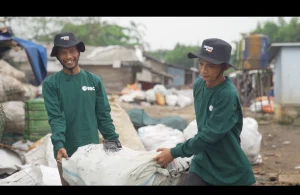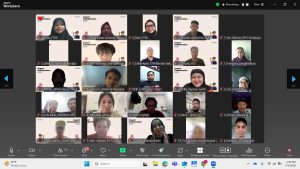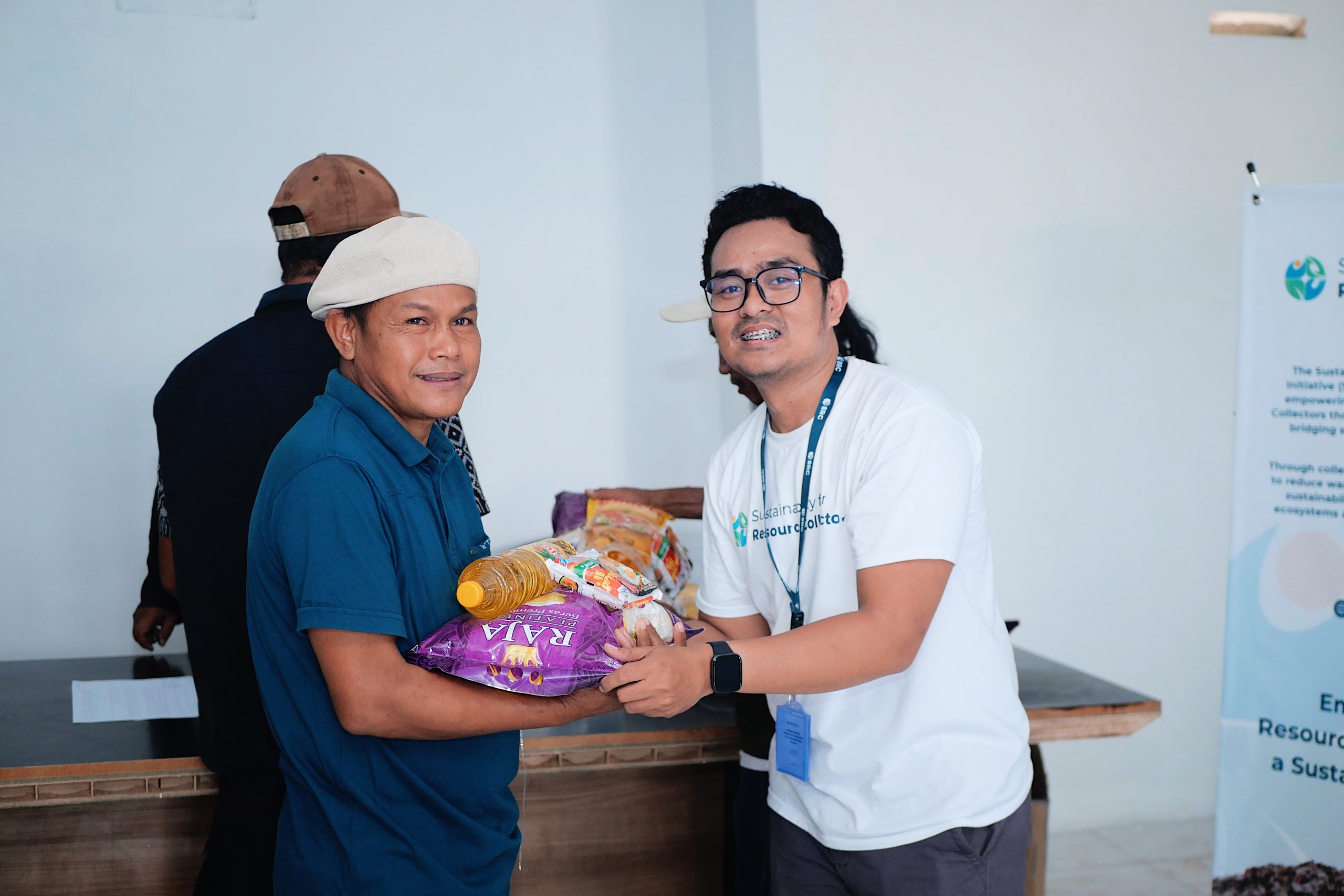
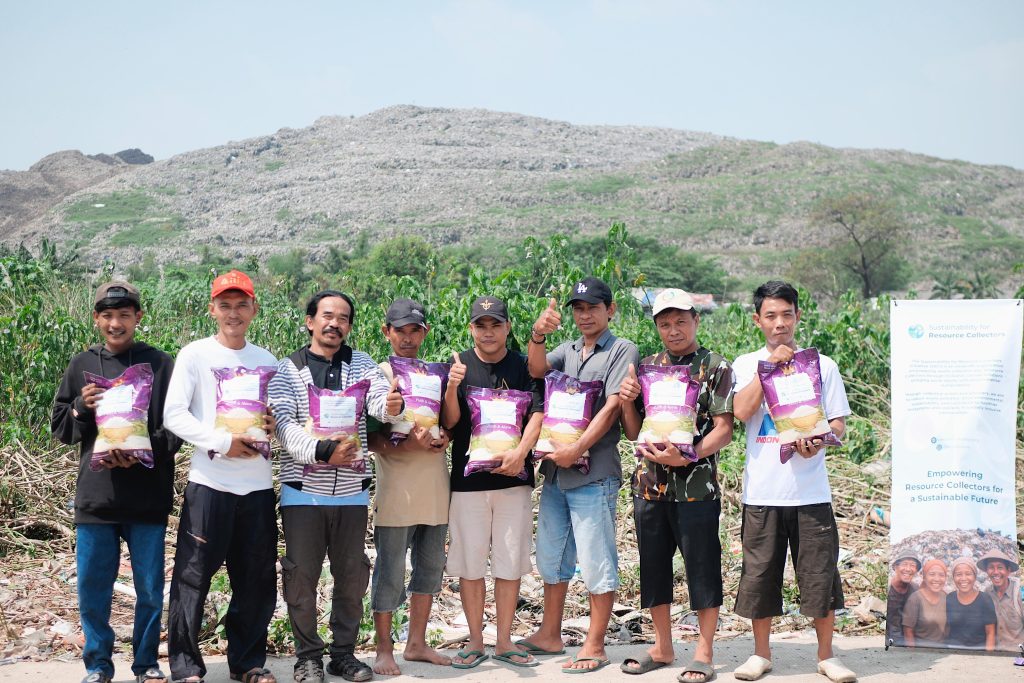
BEKASI, May 31, 2025 — The Sustainability for Resource Collectors Initiative (SRCI), a non-profit organization that empowers resource collectors through circular solutions, held a food package distribution and a face-to-face meeting with resource collectors at the Bantar Gebang Landfill in Bekasi on Saturday, May 31, 2025.
This activity not only met basic needs but also opened a dialogue between SRCI and resource collectors. A total of 639 resource collector families, coordinated by the Indonesian Scavenger Association (IPI), attended. The 639 food packages, each containing 5 kg of rice, 1 liter of cooking oil, and 1 packet of instant noodles, were sold.
According to SRCI Indonesia Country Manager, Annisa Fauziah, resource collectors play a significant role in protecting the environment, yet in Indonesia, the waste management sector remains largely informal. “Most of them come from marginalized groups and do not receive adequate social protection,” Annisa said in ” Berbagainya “.
According to the SRCI, 3.7 million people in Indonesia work as waste collectors, and 64% of them live below the poverty line. They also lack job security and safety (42%) due to inability to pay. The foundation also notes that waste collectors are the sixth most dangerous occupation in the world, with 33 fatal injuries per 100,000 workers. “In terms of access, 21% of workers have difficulty accessing technological devices and the internet, preventing them from accessing information and greater opportunities,” she explained.
SRCI also serves as a link between resource collectors and educational programs, social benefits, and opportunities, making them key players in the circular economy and seen as true environmental heroes.
Previously, SRCI has operated in 10 provinces and empowered more than 4,000 resource collectors. However, most still work at the pre-landfill collection level.
This year, SRCI reached out to landfills, first distributing basic food packages at the Suwung Landfill in Bali, followed by the Bantar Gebang Landfill. This is the largest landfill in Indonesia, covering an area of 110.3 hectares and a waste level of 40 meters, accommodating approximately 55 million tons of waste.
The distribution of basic food packages was chosen because it has a direct, tangible impact on the target community. “It also builds trust between the organization and the community, as a foundation for more sustainable empowerment programs in the future,” explained Annisa.
In addition to this activity, the SRCI also runs various other programs to support improving the quality of life of resource collectors. Some of these include occupational health and safety programs, skills and literacy education, family nutrition programs, and others. All programs are designed to address the fundamental challenges faced by waste collectors and encourage their inclusion in sustainable economic development.
“We believe that by providing equal access to information, social protection, and economic opportunities, resource collectors can become key actors in a just and sustainable circular economy,” Annisa continued.
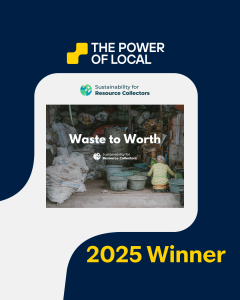
Recently, SRCI, founded in 2016, was selected to represent Indonesia as a finalist in the Ashoka Power of Local Challenge. From 900 applicants, 80 semifinalists were selected and are currently among 24 finalists to receive funding of up to US$60,000, which will be used to provide access to social enterprise education for waste collectors.
The SRCI is open to collaborating with various parties, including companies seeking to implement Corporate Social Responsibility (CSR) programs that have a real impact on the community. Through this partnership, SRCI is ready to help companies design and implement targeted and impactful social programs for waste collectors in Indonesia.
“In line with our mission, we hope this initiative will be the beginning of a long-term collaboration to improve the welfare of waste collectors and provide them with broader access to inclusive social programs,” added Annisa.
Furthermore, we will continue to expand our impact to other regions across Indonesia. We welcome collaboration from all sectors—including companies seeking to implement Corporate Social Responsibility (CSR) programs that create real impact at the community level. Through cross-sector collaboration, we believe that resource gatherers are not simply marginalized workers—but environmental heroes deserving of protection, recognition, and opportunity. If your organization wants to make a difference, we invite you to contact us for consultation and collaboration.